.

.

2015. március 13., péntek

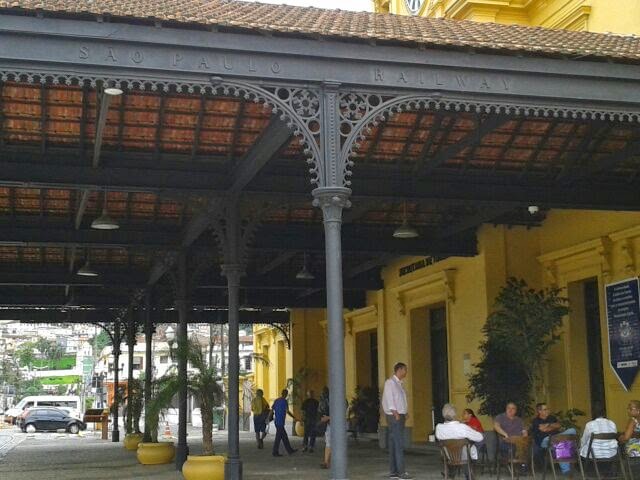
Santos regi varosresze...Old Santos city

Santos Brazilia egyik legregebbi varosa es jelenleg a legfontosabb kikotovarosa. Amikor a portugalok partra szalltak 1500-ban, Santos mai teruletet a Tupinikin indian torzs lakta. Azonban 1532 tajan, az elso telepulesek (tobbek kozott Sao Vicente) letrejottekor, a terulet folyamatosan a Tamoio-k tamadasa alatt allt,  akik a franciak szovetsegesei voltak. A franciakat 1560-ban Rional levertek, a Tamoio-kat pedig nemsokkal utana lemeszaroltak.

1580-ra Santos viragzo kikotovaroskava nott, mintegy 400 lakohazzal. Legelso export cikke a cukor a volt, amit a hegyek labanal es a fennsikon nott cukornadbol nyertek. A 19. szazad vegere ezt felvaltotta a kave amely gyorsan Brazilia fo beveteli forrasava valt. A kavekereskedelem Sao Pauloval valo osszekotesenek es az ipari magnas Visconde de Maua altal letrehozott,  a Santos-t Sao Pauloval osszekoto vasutvonalnak koszonhetoen Santos gazdag kikotovarossa notte ki magat.
A tengerparton pazar kavekuriak sorakoztak, a kozpont pedig Brazilia legfontosabb tozsdejenek, a Bolsa do Cafe-nak adott helyet.

Santos egy szigeten terul el es az obol fole tornyosulo hegyek veszik korul. A gyarmatosito idokben feherrre meszelt hazaival, templomaival es tiszta, feher homokos tengerpartjaval Brazilia egy legelbuvolobb varosa lehetett. 

Sajnos a 20, szazadban kitort sargalaz, es a kozelben fekvo Cubatao varos altal okozott ipari szennyezes hanyatlasra itelte Santost es a varos sokat veszitett varazsabol.
Az 1980-as evekben a tenger es a hegyek kozott fekvo hatorszag lett Del-Amerika egy legkellemetlenebb ipari zonaja. Cubatao petrokemiai uzemeit a sajtoban csak "Halalvolgynek" emlegettek es a fold legszennyezettebb sarkava kialtottak ki mivel az a veszely fenyegetett, hogy a dombokban felhalmozott mergezo hulladekok belecsusznak a tengerbe.
Egy foldcsuszamlas, majd a szuletesi rendellenessegekkel szuletett gyerekek szamanak novekedese vegul elinditott egy tisztitasi hullamot Cubatao-ban ami mara egy sikeres projektnek mondhato. 

A mai Santos kezdi visszanyerni regi arcat. A gyarmati idokbol megmaradt varoskozpontban ma villamos viszi korbe a turistakat hogy megmutassa nekik a varos nevezetessegeit, a gyarmati idokbol fennmaradt templomokat, a Bolsa de Cafe-t - ez utobbi egy remek kis muzeum lett, ahol Brazilia legfinomabb eszpresszojat szolgaljak fel. Santos ad otthont a Santos FC altal uzemeltetett Pele muzeumnak is, ezzel tisztelegve a futball legendanak, es a varosnak, ahol szuletett es jatszott. (Egyebkent Neymar is a Santos FC-nel kezdte palyafutasat 2003-ban).      

--------------------------------------------------------------------------------------------------------------------------

Santos is one of Brazil's oldest cities and has long been its most important port. When the Portuguese arrived, the Tupinikin people dominated the region. However, the first settlements at neighbouring São Vicente (1532) were constantly under attack by the Tamoio who were allies of the French. The French were defeated at Rio in 1560 and the Tamoio massacred soon after.

By the 1580s Santos was a burgeoning port with some 400 houses. The first export was sugar, grown as cane at the foot of the mountains and on the plateau. By the late 19th century this had been replaced by coffee, which rapidly became Brazil's main source of income. The city was connected to São Paulo and the coffee region by the British under the guidance of Barão Visconde de Mauá, and the city grew wealthy.
The seafront was lined with opulent coffee mansions and the centre was home to Brazil's most important stock exchange, the Bolsa do Café.

Santos stands on an island in a bay surrounded by towering mountains and extensive areas of lowland mangrove forest - a setting equally as beautiful as that of Salvador or Rio. When it was dominated by colonial houses, churches and clean white-sand beaches Santos itself must have been one of Brazil's most enchanting cities.

But in the 20th century an evil reputation for yellow fever and industrial pollution from nearby Cubatão left the city to decay and it lost much of its architecture along with its charm. In the 1980s, the hinterland between the sea and mountains became the site of one of South America's most unpleasant industrial zones. The petrochemical plants of Cubatão were so notorious that they were referred to in the press as the 'The Valley of Death'. Santos and around was said to be the most contaminated corner of the planet, with so much toxic waste undermining the hills that the whole lot threatened to slip down into the sea. In the late 1980s, a spate of mutant births in Cubatão eventually prompted a clean-up operation, which is said to have been largely successful.

Contemporary Santos is getting its act together. The old colonial centre has been tidied up and Scottish trams ferry tourists past the city's sights. These include a series of colonial churches and the Bolsa do Café - a superb little museum whose café-restaurant serves the most delicious espresso in Brazil. Santos is also Pelé's home and the city he played for almost all his career. Santos FC has a museum devoted to the club and to Pelé and it is easy to attend a game. (By the way Neymar started his career at Santos FC too in 2003).

(Source: http://www.footprinttravelguides.com/latin-america/brazil/sao-paulo/the-coast-of-sao-paulo/santos-and-sao-vicente)


Bolsa de Cafe


Santuário Santo Antônio do Valongo


Santos old city


Pele museum


Estação do Valongo


2015. március 12., csütörtök

A csaladom es a foci...My family and the football...

Kezdjuk a legsokkolobb hirrel: sem en, sem Eclezio nem szeretjuk a focit. Ez van. Igy alakult, igen, van olyan brazil aki nem szereti a focit. (es van olyan magyar, aki nem szereti a vizilabdat, ha!) Mivel nem szereti, ezert nem is tud rola tul sokat, rolam aztan nem is beszelve. A vilagbajnoksagokat azert nyomon kovetjuk, igy 2014 ota mar en is tudom ki az a Neymar, meg David Luiz meg Thiago Silva. Es nekem is veluk egett az arcom a 7:1-es vereseg utan (uristen, nem tudom mikor sajnaltam ennyi embert egyszerre, borzaszto volt, meg most is konnybe labad a szemem) Es azt is tudom kabe hogy ezek a jatekosok melyik futball klubhoz igazoltak le, de aztan ennyi is. Tolem mar ez is nagy teljesitmeny, Ecleziora nezve pedig szegyen, mivel meg e keveske informacio is meghaladja az o “foci tudasat”

Na, nem igy a csaladja. Eclezio otthon nemcsak az “anti-vallasossaga” miatt log ki, hanem a foci iranti erdektelensege miatt is, ami szerintem jobban piszkalja a csoret masoknak, mint a templomba nem jaras. A foci Braziliaban egy szent dolog, muszaj, hogy legyen egy csapat aminek drukkolsz, olyan nincs, hogy nincs. Minden egyes alkalommal mikor megyunk, a kerdes, hogy melyik csapatnak drukkolunk felmerul, aztan tarsasagtol fuggoen bemondunk egyet, lehetoleg ugy, hogy minel kevesebb embert bantsunk meg. Azert, hogy ne legyen ennyire egyszeru a dolog, Eclezio csaladjan belul is mindenki mas csapatnak szurkol, ilyenkor probalunk egy harmadikat megnevezni. Dinho peldaul elvakult Corinthians rajongo, Eclezio apukaja pedig Palmeiras fan, igy en legtobbszor a Santos FC-t szoktam megjelolni. Szegeny Caio kapott mar mindefele szinu polot es zaszlot a nagybatyjatol is es a nagyapjatol is, es azt hordja amelyik eppen otthon van. (Talan ha megerkezunk, leteszem a voksot a Santos FC mellett, hogy elkeruljuk a tovabbi vitat mikor melyik polot viselje) :-)
A nagy futball rajongoknak amugy egyszer en is hasonlo szenvedellyel kezdtem beszelni a magyar vizilabdarol, de valahogy nem hatotta meg oket, a focin tul nem nagyon latnak mas sportagat amiert ilyen szinten rajongani lehet. Mindegy is, osszeveszni ezen tuti nem fogunk. Magamtol nem, de tarsasagban azert szivesen nezek focit, es Santosban is majd szeretnek elmenni egyszer egy focimeccsre.


------------------------------------------------------------------------------------------------------------------------


Let`s start with the shocking news: neither me nor Eclezio like football. That`s it. Yes, there are Brazilians who don`t like football (and in the same way there are Hungarians who don`t like waterpolo!). As Eclezio is not interested in football, hence, he doesn`t know much about it, not to mention me, my knowledge is also quiet limited. Despite of our non-interest tough, we usually follow the world cup, so since 2014 I have known who Neymar, David Luiz and Thiago Silva are and I was ashamed with them of the 7:1 beat from Germany last year. (Oh my Gosh, I think I have never been so sorry for so many people at once, it was a really heartbreaking game). I also know more or less that to which football clubs these players belongs to, but that`s all. It`s already more than expected from me, and shame on Eclezio that he has even less knowledge about it.

Well, not his family. Eclezio  is out of line not only because of his non-religous lifestyle but his lack of interest of football too. I believe the latter is more painful for some of his family members than the fact that he is out of church. Football is a holy thing in Brazil, it just cannot happen that you don`t have a team to cheer. Every time we visit our family and friends in Brazil the question of "Which one is your favourite football club" comes up and depending of the content of the group, we try to pick one to hurt as less people as possible.
It`s not so easy though because our family members cheer for different teams so in this case we usually pick a third team. Dinho for example is crazy for Corinthians, while Eclezio`s father is a Palmeiras fan, so I usually say Santos FC. Poor Caio has already a collection of t-shirts and flags from the clubs his uncle and grandad cheer for and he wears the shirt depending who is at home on that day. (Maybe I will set him at Santos FC just to avoid further quarrel about the t-shirts) 
By the way, once I tried to talk about the Hungarian waterpolo team in the same way of passion as they do about football but it didn`t seem to impress them - maybe being a football fan is such a holy thing that no other type of sport game can reach such heights. Anyhow we won`t fight about it for sure. Not myself, but I gladly watch football in company and one day I would like to see a real game in Santos too.
 

2015. március 10., kedd

Mindent Braziliarol - Etnikai es vallasi megoszlas...All about Brazil - Ethnicity and religion

Etnikum:

Brazilia lakossaga hihetetlenül sokretu es kevert. A lakossag koreben tobb, mint 180 szinarnyalat ismer, korulbelul ennyi a kulonbozo keverek, hogy kiben hanyad resz indian, fekete stb… van. Fajgyulolet nincs, azonban a fekete boruek általában a társadalom also szegmenseben helyezkednek el.
A fajgyulolet “hianya” nekem egyebkent uditoleg hat Europa utan, ahol akar nyiltan akar burkoltan, de nagyfoku rasszizmus tapasztalhato majdnem mindegyik orszagban. Meg a a multikulti London sem tudja neha az udvarissag palastja ala rejteni igazi velemenyet – hanyszor lattam a buszon, hogy feher ember nem adja at a helyet az idos/terhes feketenek es vice versa, mig az azonos szinuek mindig nagyon elozekenyek egymassal. Vagy ami engem kulonosen irrital az a rasszizmusbol es az elnyomas erzesebol fakado passziv agressziv viselkedes – amikor (foleg fekete) nok egesz testtartasa es viselkedese sertodottseggel teli, ahogy latszik rajtuk, hogy azonnal keszen allnak arra, hogy neked essenek, ha veletlenul a tomegben sikerul hozzajuk erni. Ezt a folyamatos durcas viselkedest semmilyen mas szinu embernel nem tapasztaltam.
Braziliaban az uralkodo etnikum a fehereke (53%) ezen belul is foleg a portugal, olasz es spanyol hoditok utodai, valamint nemet, holland, ukran, osztrak. Itt el Del-Amerika legnagyobb magyar kozossege is. 1,5%-a a lakossagnak azsiai: japan, arab, torok es kinai.
Delkeleten foleg feherekkel talalkozhatunk, ezenkivul sok itt a fekete es a mulatt is. Eszakkelet a szinesek hazaja, rengeteg a mulatt es a fekete. Eszakon jobbara meszticek (amikor az egyik szulo indian, a masik feher ember) es feherek elnek, itt el az indianok zome. Az orszag kozepe vegyes etnikumu. Delen feher tobbseg es mesztic kisebbseg el leginkabb. 

Vallas:

A vallasi osszetetel a kovetkezo:
római katolikus 74%
protestáns (pünkösdi, baptista, adventista, lutheránus, kálvinista, anglikán) 15,4%
más vallások (Jehova tanúi, Utolsó Napok Szentjei, buddhista, izraelita, iszlám) 1,7%
spiritiszta 1,3%
afrikai eredetű vallások (candomblé, umbanda) 0,3%
felekezeten kívüli, agnosztikus, ateista 7,3%

Brazilia a vilag legnagyobb katolikus lelekszamu allama. Altalanosan elmondhato (legalabbis az en tapasztalatom alapjan), hogy a brazilok nagyon vallasos emberek, en peldaul eddig nem talalkoztam olyan brazillal, aki ne hitt volna Istenben. Ez a mindennapi kommunikacioban is megnyilvanul, az Istenhez (deus) valo fohaszkodas, a hala (gratidão de deus), vagy koszonetnyilvanitas. Isten iranti szeretetuket es halajukat a brazilok naponta tobbszor kinyilvanitjak. Ez persze csak annak fura, aki nem vallasos kornyezetben nott fel, mint peldaul en…A nem vallasos kornyezetre ertem azt, hogy nem jartam templomba, sokaig nem voltam megkeresztelve, es nem erzem termeszetesnek azt, hogy Isten letezik (igaz nem is tagadom). Mivel en a 80-as evek szocialista Magyarorszagan voltam gyerek igy sem otthonrol, sem az iskolatol nem kaptam vallasos nevelest – a szuleim pedig egyetertettek a materialista vilagnezettel.

A csaladom brazil fele szinten nagyon vallasos, csaladon belul megoszlik azert, hogy ki mennyire melyen gyakorolja a vallast, de mindenki rendszeresen jar templomba, a vallas nekik a mindennapok resze. Embere valogatja ki mennyire tulajdonit mindent Isten ajandekanak, de azert boven elofordul az en csaladom koreben, hogy majdnem mindent annak tulajdonitanak. Ez nekem inkabb erdekes, mint zavaro, es ilyenkor sokszor megfigyelo allasban vagyok. Egyebkent senki nem akar megteriteni, senki nem itel el azert mert ateista vagyok, es nagyon becsulom bennuk, hogy elfogadnak ilyennek, es fel sem merul, hogy ez negativ vagy sem. Es az en reszemrol sem merul fel, hogy ez negativ vagy sem (tehat becsulom magam ezert, haha).
Most jon a kerdes, hogy vajon Eclezio vallasos-e? Igen is, meg nem is. O is jart templomba amig gyerek volt, vallasos kornyezetben nott fel, es o is hisz Istenben de a szo klasszikus ertelmeben nem tekinti magat vallasosnak, tehat nem tulajdonit mindent Isten ajandekanak, nem jar mar templomba es nem imadkozik. Egy dologban megegyezik a velemenyunk: nem kell ahhoz vallasosnak lenni, hogy a “fo bunoket” ne kovesd el, mert sajnos eppen eleg sok “kirakatvallasos” ember van igy is.
O azert tobb tamadasnak van kiteve otthon, mivel o kvazi elhagyta a templomot es mindig akad egy-ket lelkes onkentes a kornyezeteben, aki vallalkozna arra, hogy o majd visszateriti az elveszett baranykat.  Szerencsere keves ilyen van, es azokat Eclezio mindig el szokta hajtani, akkor kerul nehezebb helyzetbe csak, amikor a sajat csaladtagjai akarjak ot “megmenteni”. Ilyenkor a vita kicsit magasabb decibelt ut meg, de aztan amugy a legtobb ember tudomasul veszi, hogy Eclezio elete mar mas iranyba fordult es nem eroltetik nagyon, hogy kezdje el megint a templomba jarast.
Caio egyelore nem reszesult vallasos nevelesben, megkeresztelve sincs. En ugy voltam vele, hogy ez a vallas kerdes nem nekem fontos, igy ha ok ugy kivanjak, akkor Caiot megkeresztelhetjuk Braziliaban es templomba is eljarhat a nagyszulokkel. De mivel az apja egyelore nem hajlik az ilyen megoldasra, igy ez a tema egyelore jegelve van, kesobb pedig majd meglatjuk.

--------------------------------------------------------------------------------------------------------------------

Ethnicity

The population in Brazil is incredibly diverse and mixed comprising many races and ethnic groups. In general, Brazilians trace their origins from four sources: Amerindians, Europeans, Africans and Asians. More than 180 version of skin colour toning are known; South of Brazil is the region with the largest percentage of whites, while the Southeastern region of Brazil is the most ethnically diverse part of the country. The population of Northeast Brazil is a result of an intensive race mixing. Northern Brazil, largely covered by the Amazon rainforest, is the Brazilian region with the largest Amerindian influences, both in culture and ethnicity while the Central-West region was inhabited by diverse Indians when the Portuguese arrived in the early 18th century.

There is no racism in Brazil which for me makes a big difference comparing to Europe. Europeans believe that discrimination on the basis of ethnic origin is the most common form of discrimination however in other European countries xenophobia and intolerance with foreigners are also added.
You cannot experience discrimination directly in UK (it is against the law) however hidden racism can be observed on everyday basis. Which is very interesting since kids in English education system are especially taught about high level of tolerance with each other and still – how many times I can see on the bus that white people never give up their seats for old/pregnant blacks and vice versa.

Religion

roman Catholic 74%
protestant (Pentecostal, Baptist, Adventist, Lutheran, Calvinist, Anglican) 15.4%
other religions (Jehovah's Witnesses, Mormonism, Buddhist, Jewish, Islam) 1.7%
spiritualist 1.3%
african-derived religions (candomblé, umbanda) 0.3%non-denominational, agnostic, atheist 7.3%

Religion in Brazil has a higher adherence level compared to other Latin American countries, and is more diverse. The dominant religion of Brazil historically was and still is Christianity. In my experience Brazilians are very religious people, at least I don’t know anybody from Brazil who is not religious in some way.
Religiousness manifests itself in everyday conversation in the way of gratitude (gratidão de deus), pray and thank (graça de deus). Their thanks and love of God are declared several times a day. It is of course sounds strange only to someone who hasn’t grown up in a religious environment like myself. Altough my grandparents were religious people, my parents kept themselves far away from church and I didn`t get any religious education from home or from the school (in the 1980`s, under Socialism, religion was prohibited – Marx was strongly anti-religious and materialism was the main ideal of Socialism)

My family in Brazil is also very religious, everyone goes to church regularly, religion is part of everyday life for them. Most of the things are considered as attributed gift of God what I found very interesting. It doesn’t annoy me at all and no one wants to persuade me to go to church that I really appreciate. My family respect my atheism and I respect their religion therefore there is no conflict about this subject at home.
Now the good question is coming: whether Eclezio is a religious person or not? The answer is yes and no. He grew up in a religious environment and indeed used to go to church however nowadays religion is not part of his everydays. Yes, he believes in God but he thinks it doesn’t make the man better if they go to church or pray frequently. He doesn’t agree with that kind of preaching (for example to collect donation from poor people) that is based on people`s lack of education and silliness.
In Brazil, sometimes people from church find Eclezio and want to convince him to return back to the church  - well, it always make him very angry so such conversation usually doesn’t last for long.
Regarding Caio, since religion is not a thing which is important to me, I left it to Eclezio and his family whether he (or they) want Caio to be baptized or not, but at the moment it is not an issue. Let`s see, maybe later.

2015. március 9., hétfő

Mindent Braziliarol - a brazil konyha...All about Brazil - Brazilian cuisine

Eloszor is a "brazil konyha" kifejezes eleg tag fogalmat takar, hiszen mit is tekintunk brazil konyhanak? Eszak-, kozep-, vagy del-Braziliat? Vagy az Amazonas videket? Tehat amikor en brazil konyhazrol beszelek, akkor azt Sao Paulo allamra ertem, ami nem jelenti azt, hogy mashol ezek az etelek ne lennenk ismertek, vagy eppen kozismertek, de lehet, hogy mas variacioban, vagy akar teljesen mas fuszerekkel izesitve.

A brazil konyhara mind az europai, mind az afrikai bevandorlok, mind pedig a oslakos indianok hatassal voltak eppen ezert a brazil konyha regionkent nagyon valtozo attol fuggoen, hogy mely koloniak etkezesi szokasai terjedtek el, illetve milyenek az adott regio termeszeti adottsagai. Peldaul eszakon, ahol fokent az Afrikabol rabszolganak behurcolt feketek leszarmazottai elnek, az afrikai mellett a portugal es az indian hatasok ervenyesultek, mig legdelebbre a kozeli orszagok mellett, mint Argentina vagy Uruguay, a "nemet hatas" a legerosebbn, es az o altaluk preferalt etelek dominalnak (most persze nem olyan nemzeti etelrol beszelek, mint peldaul a feijoada, amit szerte Braziliaban ismernek).
Ehhez hozzaadodnak a termeszeti adottsagok, peldaul eszakon, koszonhetoen a rengeteg erdonek es edesvizu folyonak, a hal es a manioka lisztbol keszult etelek az alapjai a mindennapi etkezesnek, mig delen, mivel ebben a regioban sok az allatalapu gazdasag, igy itt inkabb a marhafelekbol keszult barbeque etelek terjedtek el.  

A hozzavalok, amelyeket az oshonos indianok hasznaltak eloszor, ugymint a cassava (mas neven manioka vagy tapioka), guarana, acai, cumaru, tacaca, es ehhez jottek azok a fuszerek, amiket mar az europai bevandorlok hoztak magukkal Portugaliabol, Olaszorszagbol, Spanyolorszagbol, Lengyelorszagbol vagy Svajcbol. Ezek a bevandorlok peldaul hozza voltak szokva a buza alapu etrendhez, es ehhez meg bevezettek olyan dolgokat mint a bor, a leveles zoldsegek vagy a tejtermekek. Amig a burgonya nem volt elerheto szamukra addig azt edes maniokaval potoltak. 

Manapsag a gyokerzoldsegek mint a manioka, a jamgyoker vagy a gyumolcsok mint az acai, mango, papaya, guava, narancs, banan, maracuja, ananasz reszet kepezik a mindennapi fozesi alapanyagoknak.

Ami a fuszereket illeti, nekem rogton a koriander es a romai komeny maradt meg mint "tipikus" fuszer, mivel mi otthon ezt a kettot nem, vagy csak nagyon ritkan hasznaljuk. Amugy ugyanugy megvan a paprika, a bors es a fokhagyma, es a fuszerezes Brazilia ezen teruleten nem ter el nagyon az europaitol.

Amit nagyon szeretek az a bufe, amikor sok-sok fajta etel van kiteve es mindenbol szedhetsz egy kicsit, ez a legtobb helyen megtalalhato es egy ilyen bufeben altalaban a kovetkezo etelek szerepelnek:

feijoada (kabe a mi fustolt csulkos babunk)
rizs
pastel v. pasteis (toltott pite)
coxina (bundaban sult csirke krokett) 
sult krumpli
sult edes burgonya
sult banan
parolt kaposzta (couve refogada)
kulonbozo salatak ecettel vagy majonezzel
sult hus (sertes vagy csirkecomb)
farofa (piritott manioka lisztbol keszitett koret) piritott szalonnaval
lasagne
bolognai spagetti
pao de queijo (sajtos zsomle)
teperto
palmasziv

Virado a paulista:
Tipikus sao paulo-i etel. Tobb variacioja is letezik, de alapvetoen a font felsorolt etelek kozul tobbnek a kombinacioja. Reggelire azert nem, de napszaktol fuggetlenul barmikor kerul az asztalra eleg gyorsan elfogy :-) 

A brazilok ezen felul nagyon szeretik a barbeque-t, a Rodizio steakhouse ettermek fix osszegert kinalnak grillezett husokat, addig amig jol nem lakunk. Az osszeg nemcsak a husokat tartalmazhatja, hanem benne van a salata bar kinalata is igy aki szereti megtomni a hasat, az ezzel a hellyel csak jol jarhat. 

http://www.erdekesvilag.hu/rodizio-amit-egy-igazi-husevo-nem-hagyhat-ki-x/
A Rodizio tipusu etteremnek egyebkent van pizza es sushi valtozata is, csakugy mint a husoknal, minden fajta pizzabol vagy sushibol kinalnak egy szeletet (darabot) amig az ember jol nem lakik. Nekem a pizzas is tetszett, sushi-s Rodizioban meg nem voltam.
Tengeri herkentyukbol en a fott tengeri rakot kostoltam paradicsommal, illetve a frissen sult tarisznyarakot lime-mal, napsutessel, tengerparttal (kizarolag) :-)

Edessegek: szeretik a pudingot, a kremes karamellas puding nagyon nepszeru, ezen kivul a gyumolcsos pudingok maracujaval, mangoval, eperrel vagy a csokis pudingok.
A puding torta (Pastel de nata) eredetileg Portugaliabol szarmazik, es foleg Eszak-Braziliaban elterjedt. Van ket edesgolyo, mint nalunk a kokuszgolyo, az egyik csokis (brigadeiro) a masik kokuszos (beijinos).
En sok puding es krem alapu edesseggel talalkoztam, keves konnyu, kremes, habossal es mindegyik edesseguk valami iszonyat gej es edes igy tul sokat en szemely szerint soha nem tudok enni beloluk.  

Alkohol: Caipirinha, aminek az alapja a cachaca (cukrnadbol keszult feher rum) es nagyon finoooom :-) Nalam a Caipirinha es a Mojito a top 1-2 (tudom, az utobbi nem brazil, dehat a tequila akkor is nagyon jo baratom:-))

--------------------------------------------------------------------------------------------------------------------

First of all, the expression "Brazilian cuisine" is a quiet broad concept as what exactly means Brazilian? North or South or Mid of Brazil? Or the area of Amazon? So when I talk about "brazilian dish" I mean South-east of Brazil, naming Sao Paulo state which doesn`t mean that those dishes are not well known in other areas but maybe in different combination or flavour.

Brazilian cuisine has European, African and Amerindian influences. It varies greatly by regions reflecting the country`s mix of native and immigrant populations before and after colonization. For instance, the culinary in the North is heavily influenced by a mix of African, Indigenous and Portuguese cuisines. In the Northern states, due to the abundance of forest and freshwater rivers, fish and cassava are staple foods.
In Southern Brazil, due to the long tradition in livestock production and the heavy German immigration, the red meat is the basis of the local cuisine and churrasco, a kind of barbecue, is a local tradition.

Ingredients first used by native peoples in Brazil include cassava, guarana, acai, cumaru and tacaca. From there, the many waves of immigrants brought some of their typical dishes, replacing missing ingredients with local equivalents. For instance, the European immigrants (primarily from Portugal, Italy, Spain, Germany, Poland and Switzerland) were accustomed to a wheat-based diet, and introduced wine, leaf vegetables, and dairy products into Brazilian cuisine.

Root vegetables such as cassava (locally known as mandioca, aipim or macaxeira, among other names), yams, and fruit like acai, cupuacu, mango, papaya, guava, orange, passion fruit, pineapple are among the local ingredients used in cooking.

Regarding spices, for me coriander and cumin are the main characters of some dishes and salads because they are not really part of Hungarian cuisine so these two mean "typical taste" for me in Brazil.   

I love buffet style restaurants where I can just pick the dish I like and can try variable meals depending on my mood on that day. A typical buffet style brazilian usually includes the following:

feijoada (stew of beans with beef and pork)
rice
pastel or pasteis (rectangle-shaped thin crust pies with assorted fillings)
coxina (Brazilian chicken croquette)
french fries
fried sweet potato
fried banana
Brazilian-style collard greens
salads with vinegar or mayonnaise
roasted chicken or pork meat
farofa (toasted manioc flour mixture) with bacon
lasagne
spaghetti bolognese
pao de queijo (cheese bread)
cracklings
palmito (palm heart)

Virado a paulista:
It is a typical Brazilian dish from Sao Paulo, which is a combination of many dishes listed above served on a single plate.  It was given its name, “virado”, because it literally used to be the leftover foods all combined together.

In addition to above barbeque is very popular in Brazi, "Rodizio" is an "all-you-can-eat" style stakehouse restaurants, where various kinds of quality cuts of meat, most commonly local cuts of beef, pork, chicken are offered and salad bar is also available for side dish. While not as popular, there are other rodízio style restaurants in Brazil, such as ones serving pasta or pizza, where various pizzas and pastas are brought on trays. Rodízio style sushi restaurants are also common in Brazil.

Regarding sea food, I tried cooked crabs with tomato and scampi with lime, sunshine and beach...:-))

Sweets: when it comes to sweet in Brazil, you mean REALLY sweet...puddings and cakes (bolos) are very popular in Brazil flavoured with mango, passion fruit, strawberry or chocolate.
Brigadeiro is a Brazilian chocolate ball candy, beijinho is a coconut truffles.

Beverages: I love caipirinha, mainly if it`s really cold. My other favourite is Mojito, I know it`s not Brazilian but I what can I do, I am a big fan of tequila :-) 

Feijoada


Buffet and salad bar


Pasteis e Pao de queijo


Virado a Paulista


Rodizio steak / pizza / sushi


Puddings


Sea food


Brigadeiro and Beijinos